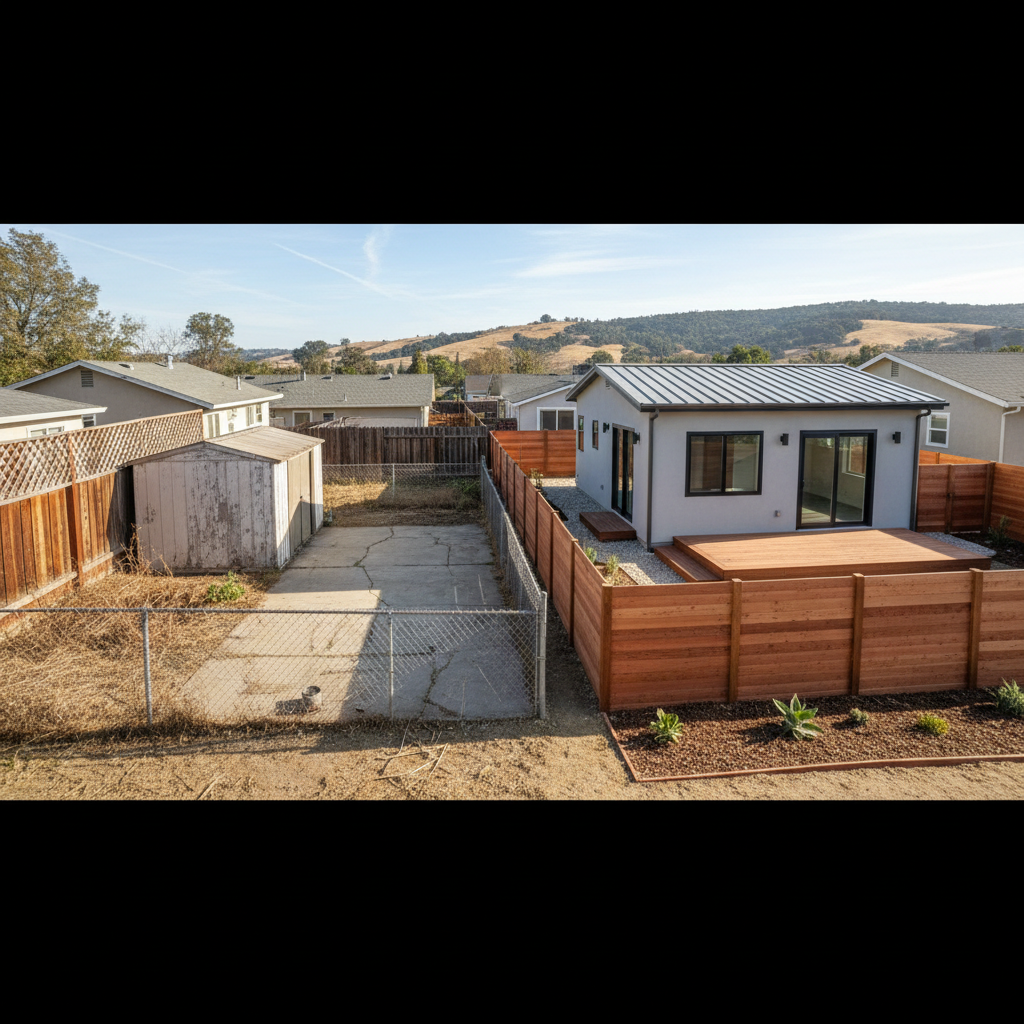
Alright, so you're thinking about a detached ADU for your San Jose property. That's a smart move, no doubt. But before you get too deep into floor plans and picking out finishes, we really need to talk about what's underneath it all: the foundation. For a detached unit, you've generally got two main ways to go: a slab-on-grade foundation or a raised foundation. Both have their good points and bad points, and what works for one homeowner might not be the right fit for another.
Slab-on-Grade Foundation: The Solid Approach
A slab-on-grade foundation is pretty much exactly what it sounds like. We pour a concrete slab right onto the ground, often with edges that are a bit thicker or footings that go deeper to keep it from cracking and shifting. This is a super common method, especially for garages or smaller buildings, and it's popular for ADUs too.
Cost & Installation
Generally speaking, a slab foundation will be your most budget-friendly option upfront. It just doesn't take as much work as a raised foundation. We handle the grading, put down a vapor barrier, add rebar for strength, and then pour the concrete. It's a quicker process, which means less time and less money spent on labor. For a lot of folks in San Jose trying to keep their ADU budget in check, this is a huge plus.
Durability & Maintenance
Slabs are incredibly tough. They're solid, pests don't like them, and you don't have crawl spaces where moisture or critters can become a real problem. Maintenance is pretty minimal; you're mostly just looking at the slab itself. However, if you ever get a plumbing leak *under* the slab, fixing it can be a major headache. We're talking jackhammering concrete, which is disruptive and costly. But honestly, with good plumbing installation, that doesn't happen very often.
Appearance & Accessibility
With a slab foundation, your ADU will sit very low to the ground, usually just a few inches above grade. This can give it a sleek, modern look. It's also fantastic for accessibility, since there aren't any steps up into the unit. This is a big deal if you're planning an ADU for aging parents or if you want to rent it out to a wider group of people.
Raised Foundation: The Flexible Option
A raised foundation, sometimes called a pier-and-beam or crawl space foundation, involves pouring concrete footings and then building a perimeter foundation wall or piers that support a wood-framed floor system. This creates a crawl space underneath the entire ADU.
Cost & Installation
You should expect a raised foundation to cost more than a slab. There's more digging involved, more concrete for the footings and stem walls, and then all the framing for the floor joists and subfloor. It's a more complex build, takes longer, and requires more materials and labor. If you're building on a sloped lot, a raised foundation might actually be your only practical choice, but it will definitely add to the cost.
Durability & Maintenance
Raised foundations are also very durable, but they do come with different things to consider for maintenance. That crawl space needs to be properly vented to prevent moisture buildup, which can lead to mold or wood rot. It also needs to be sealed off to keep pests from getting in. The big advantage here is access. If you ever have a plumbing or electrical issue under the house, technicians can get into the crawl space to fix it without tearing up your floor. That's a huge benefit for long-term repairs, isn't it?
Appearance & Accessibility
A raised foundation means your ADU will sit higher off the ground, typically 18-24 inches or more. This can give it a more traditional look, especially if your main house is also on a raised foundation. However, it does mean you'll have steps up to the entrance, which can be an accessibility challenge for some. You might need to factor in a ramp if universal access is a priority.
Which One Should You Choose for Your San Jose ADU?
So, slab or raised? Here's how I usually break it down for folks in our neck of the woods.
For most detached ADUs in San Jose, especially on relatively flat lots, a slab-on-grade foundation is often the best all-around choice. It's more affordable upfront, quicker to build, and offers great durability with minimal maintenance. The low profile is excellent for accessibility and has a clean, modern look that fits well with many of the newer ADU designs we're seeing. Plus, with proper drainage around the unit, you're not going to have standing water issues, which is important given our occasional heavy winter rains.
However, there are definitely situations where a raised foundation makes more sense:
- Sloped Lots: If your backyard has a significant slope, a raised foundation can be much easier and sometimes even cheaper than trying to level the entire area for a slab.
- Existing Main House: If your main house is on a raised foundation and you want the ADU to match its height and architectural style, then a raised foundation might be the better choice.
- Future Access Concerns: If you anticipate needing frequent access to plumbing or electrical lines under the floor, or if you're just more comfortable knowing you have that level of access for future repairs, the crawl space is a definite advantage.
- Soil Conditions: In some areas, like parts of the Almaden Valley, expansive clay soils can be a challenge. While both foundation types can be engineered to handle this, some engineers might prefer a raised foundation because it allows for more flexibility with soil movement.
Ultimately, the best foundation for your detached ADU depends on your budget, your site conditions, and your long-term priorities. We always do a thorough site assessment to figure out what's going to work best for your specific property. At San Jose ADU Solutions, we've built plenty of both, and we can walk you through the specifics for your project. Don't hesitate to reach out if you've got questions; that's what we're here for.